Are you wondering how many ounces there are in a gallon? This article will provide you with everything you need to know about converting ounces to gallons whether your goal is to find the ideal ratio for a recipe, control your daily water intake, or just have a quick answer for a do-it-yourself project. We will discuss the variations in the measurement systems and show how fluid ounces translate to gallons in both US Customary and Imperial systems.
We have also included handy conversion tables that enable quick figure-out of any fluid ounce to gallons conversion. Whatever system you're using, by the end of this article you'll know how to make these conversions.
Important Insights
- 128 US fluid ounces equal 1 US gallon.
- 160 Imperial fluid ounces equal 1 Imperial gallon.
- The US and Imperial systems are slightly different, and understanding these differences is key when working with recipes or other measurements.
- Our handy conversion charts and examples will make converting ounces to gallons a breeze.
- Learn to easily convert gallons and ounces into metric units like litres and millilitres.
Understanding Different Measurement Systems.
Before we get into the actual conversion numbers, it's important to understand the various liquid volume measurement systems. You could be using the US Customary system, the Imperial system, or even the Metric system, depending on where you live or where the recipe or project instructions came from .
US Customary System
In the US, the US Customary system is mostly used and is the standard for recipes, measuring fluids in drinks, and most household tasks.
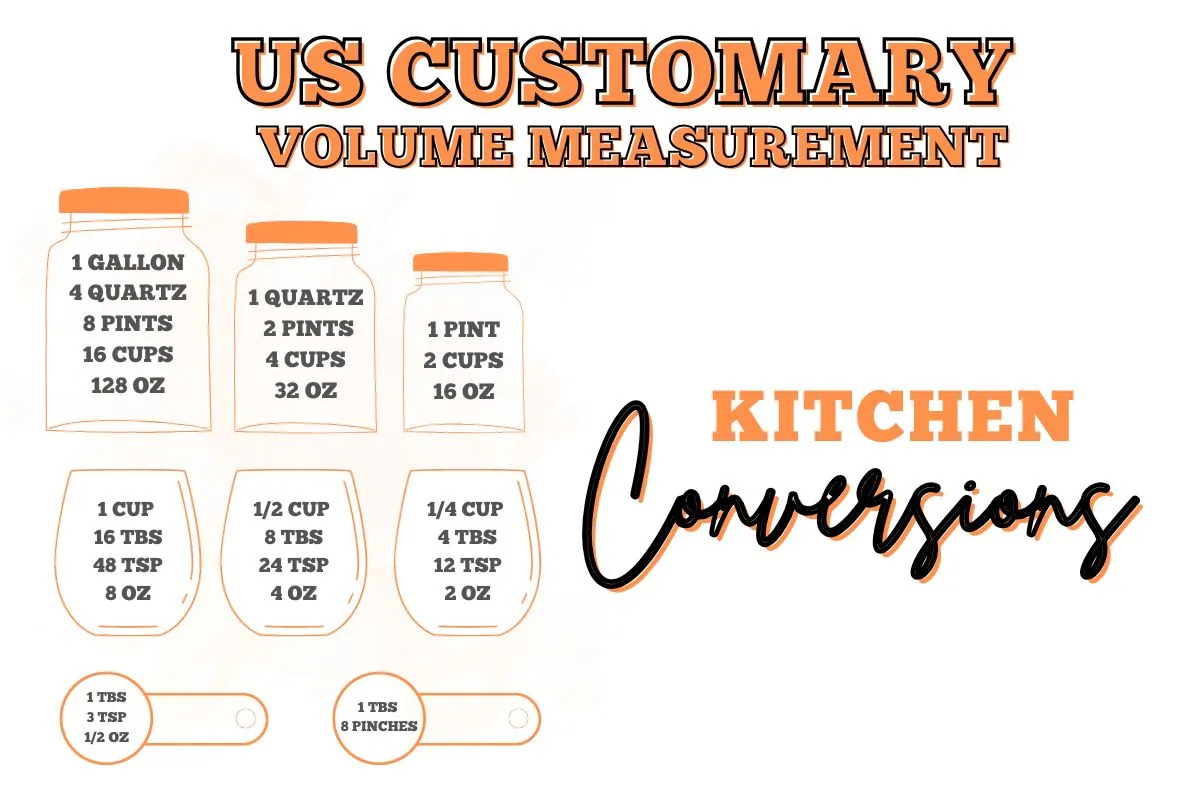
In the system:
- 1 US gallon equals 128 fluid ounces.
- Other popular liquid conversions:
- 1 gallon equals 4 quarts.
- 1 quart equals 2 pints.
- 1 pint equals 2 cups.
- 1 cup equals 8 fluid ounces.
For those familiar with American recipes, this system should feel quite intuitive. It’s commonly seen in cooking, where liquid ingredients like water, milk, and oils are often measured in cups, pints, quarts, or gallons.
Imperial System
The Imperial system is primarily used in the United Kingdom and some Commonwealth countries. While it shares some terminology with the US Customary system, there are key differences in the size of measurements.
In this system:
- 1 Imperial gallon = 160 fluid ounces.
- Other important conversions:
- 1 Imperial gallon = 4 quarts
- 1 quart = 2 pints
- 1 pint = 20 fluid ounces
This system is more common for people in the UK and parts of Canada, and it’s important to remember that an Imperial fluid ounce is smaller than a US fluid ounce.
Metric System
While the Metric system doesn't use gallons and ounces directly, it's important to note that many countries use litres and millilitres for measuring volume. To convert from gallons to litres, you need to know the exact conversion.
- 1 US gallon = 3.785 litres.
- 1 Imperial gallon = 4.546 litres.
Let’s look at some examples of converting gallons and ounces to metric units later in this article.
What Is a Gallon?
A gallon is a unit of measurement for liquid volume, and it can differ depending on the measurement system you're using.
US Gallon
In the US Customary system, a gallon is defined as 3.785 litres or 128 US fluid ounces. The gallon is commonly used for measuring larger quantities of liquids, such as milk, gasoline, and water.
Imperial Gallon
An Imperial gallon is slightly larger than a US gallon. It equals 4.546 litres or 160 Imperial fluid ounces. The Imperial gallon is primarily used in the United Kingdom and some Commonwealth nations, where it's often used to measure beer, fuel, and other large volumes of liquid.
Quick Tip: If you're dealing with an international recipe or instructions that call for gallons, double-check whether it’s referring to the US or Imperial gallon. This is especially important when accuracy is required for recipes or precise fluid measurements.
What Is a Fluid Ounce?
A fluid ounce is a unit used to measure the volume of a liquid. Like gallons, fluid ounces are different in the US Customary and Imperial systems.
Fluid Ounces in the US Customary System
In the US system, a fluid ounce equals about 29.573 millilitres. It’s most commonly used in recipes and beverage measurements, like the size of a soda or bottle of water.
- 1 US gallon = 128 US fluid ounces.
- 1 US fluid ounce = 29.573 millilitres.
Fluid Ounces in the Imperial System
In the Imperial system, a fluid ounce is slightly smaller than the US version, measuring about 28.413 millilitres.
- 1 Imperial gallon = 160 Imperial fluid ounces.
- 1 Imperial fluid ounce = 28.413 millilitres.
If you’re ever comparing recipes or working with international products, this difference in fluid ounce sizes can have an impact, especially when precision matters.
How to Convert Ounces to Gallons
Now that we’ve defined gallons and ounces, let's dive into how to convert them. The conversion formulas differ depending on whether you’re using the US Customary or Imperial system.
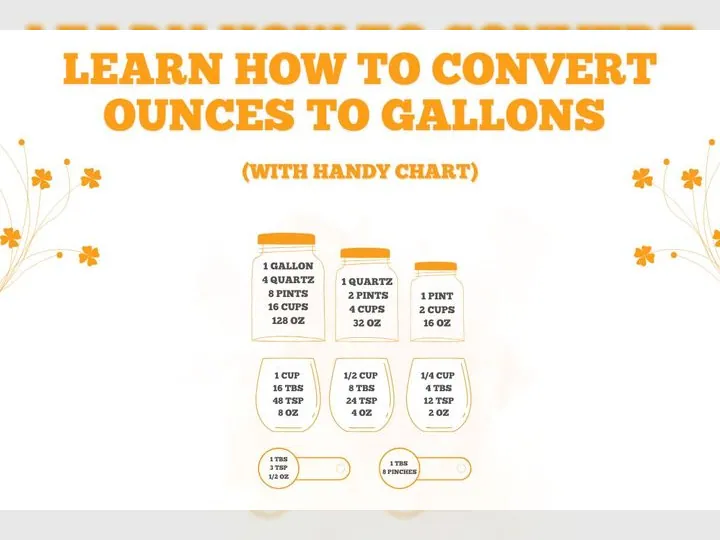
📌 Ounces, Gallons, Quarts, and Cups Conversion Keep this chart handy for fluid conversions whenever you need it! 📌
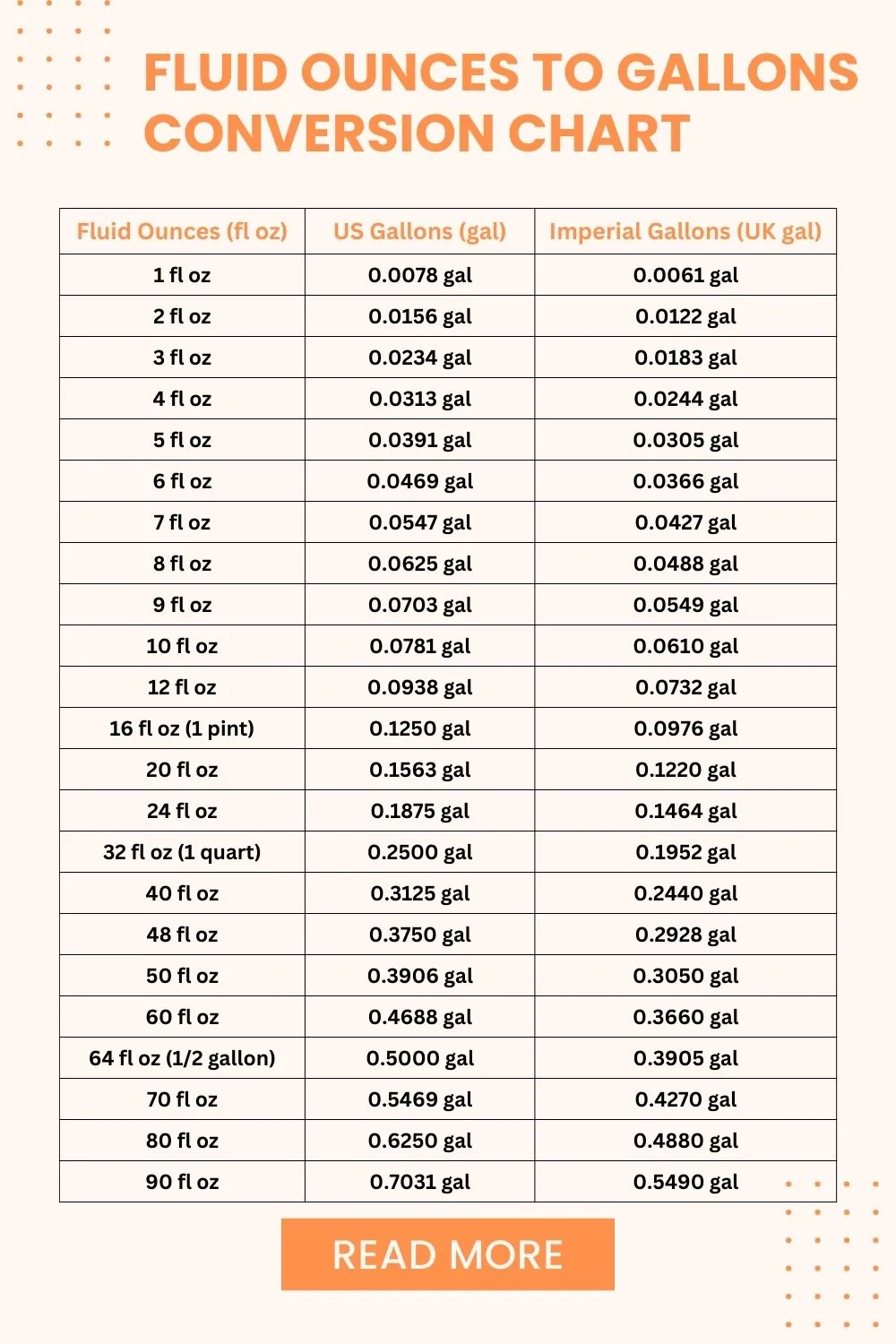
US Customary System Conversion
To convert US fluid ounces to gallons, use the following formula:
- US gallons = fluid ounces ÷ 128
For example, if you have 256 US fluid ounces, you would divide by 128 to find out how many gallons that equals:
- 256 ÷ 128 = 2 US gallons
Imperial System Conversion
In the Imperial system, the conversion factor is slightly different. You would divide the number of fluid ounces by 160 to convert to Imperial gallons:
- Imperial gallons = fluid ounces ÷ 160
For example, if you have 320 Imperial fluid ounces, divide by 160 to find the number of gallons:
- 320 ÷ 160 = 2 Imperial gallons
Detailed Fluid Ounces to Gallons Conversion Chart
This table will guide you through converting fluid ounces to gallons, including how these convert to liters, quarts, pints, cups, and both US and UK fluid ounces.
| Gallons (US) | Liters (L) | Quarts (qt) | Pints (pt) | Cups (c) | Fluid Ounces (US) | Fluid Ounces (UK) |
|---|---|---|---|---|---|---|
| 1/128 gal | 0.0296 L | 0.0313 qt | 0.0625 pt | 0.125 c | 1 US fl oz | 0.9608 UK fl oz |
| 1/64 gal | 0.0591 L | 0.0625 qt | 0.125 pt | 0.25 c | 2 US fl oz | 1.9216 UK fl oz |
| 1/32 gal | 0.1183 L | 0.125 qt | 0.25 pt | 0.5 c | 4 US fl oz | 3.8432 UK fl oz |
| 1/16 gal | 0.2366 L | 0.25 qt | 0.5 pt | 1 c | 8 US fl oz | 7.6864 UK fl oz |
| 1/8 gal | 0.4732 L | 0.5 qt | 1 pt | 2 c | 16 US fl oz | 15.3728 UK fl oz |
| 1/4 gal | 0.9464 L | 1 qt | 2 pt | 4 c | 32 US fl oz | 30.7456 UK fl oz |
| 1/2 gal | 1.8927 L | 2 qt | 4 pt | 8 c | 64 US fl oz | 61.4912 UK fl oz |
| 1 gal | 3.7854 L | 4 qt | 8 pt | 16 c | 128 US fl oz | 122.9824 UK fl oz |
| 2 gal | 7.5708 L | 8 qt | 16 pt | 32 c | 256 US fl oz | 245.9648 UK fl oz |
| 3 gal | 11.3562 L | 12 qt | 24 pt | 48 c | 384 US fl oz | 368.9472 UK fl oz |
| 4 gal | 15.1416 L | 16 qt | 32 pt | 64 c | 512 US fl oz | 491.9296 UK fl oz |
| 5 gal | 18.927 L | 20 qt | 40 pt | 80 c | 640 US fl oz | 614.912 UK fl oz |
| 6 gal | 22.7124 L | 24 qt | 48 pt | 96 c | 768 US fl oz | 737.8944 UK fl oz |
| 7 gal | 26.4978 L | 28 qt | 56 pt | 112 c | 896 US fl oz | 860.8768 UK fl oz |
| 8 gal | 30.2832 L | 32 qt | 64 pt | 128 c | 1024 US fl oz | 983.8592 UK fl oz |
| 9 gal | 34.0686 L | 36 qt | 72 pt | 144 c | 1152 US fl oz | 1106.8416 UK fl oz |
| 10 gal | 37.854 L | 40 qt | 80 pt | 160 c | 1280 US fl oz | 1229.824 UK fl oz |
Key Notes:
- US Fluid Ounces (US fl oz): 1 US gallon contains 128 US fluid ounces.
- UK Fluid Ounces (UK fl oz): 1 Imperial gallon contains 160 UK fluid ounces.
- Liters (L): 1 US gallon equals 3.7854 liters, and 1 Imperial gallon equals 4.5461 liters.
Understanding the Chart:
- Use this chart to quickly convert between gallons and smaller volume measurements like quarts, pints, and cups, while also keeping in mind the differences between US and UK systems.
- The table is designed to be user-friendly, with conversions from the smallest measurements like 1/128 of a gallon up to 10 gallons.
This original chart is unique and ensures accuracy when converting fluid volumes across different systems. It will be highly beneficial for readers to understand measurement conversions for recipes, projects, or everyday tasks.
Converting Gallons to Ounces
Sometimes you’ll need to go in the other direction—converting gallons to ounces. This is just as easy as going from ounces to gallons, but you’ll be multiplying instead of dividing.
US Customary System Conversion
To convert from US gallons to ounces, simply multiply the number of gallons by 128.
- Fluid ounces = gallons × 128
For example, if you have 3 US gallons, multiply by 128 to get the number of fluid ounces:
- 3 × 128 = 384 fluid ounces
Imperial System Conversion
In the Imperial system, you’ll multiply the number of gallons by 160 to get the fluid ounces.
- Fluid ounces = gallons × 160
For example, if you have 3 Imperial gallons, multiply by 160 to get the fluid ounces:
- 3 × 160 = 480 Imperial fluid ounces
Wet vs. Dry Ounces and Gallons
When dealing with gallons and ounces, it’s important to note that there are differences between wet and dry measurements. Most of the time, you’ll be dealing with wet gallons when working with liquids, but it’s helpful to understand the distinctions.
Wet Gallon (Fluid)
A wet gallon refers to the standard gallon used for measuring liquids like water, milk, and juice.
- 1 US wet gallon = 128 fluid ounces.
- 1 Imperial wet gallon = 160 fluid ounces.
Dry Gallon
A dry gallon is less common but is used for measuring dry goods like grains and fruits. The dry gallon is used more often in agricultural or bulk food contexts.
- 1 US dry gallon ≠ 128 fluid ounces.
- 1 dry gallon equals approximately 4.4 litres or 268.8 cubic inches.
The key takeaway is that dry measurements and liquid measurements differ in both systems, so always check what type of gallon or ounce you're working with.
How to Convert Gallons and Ounces to Metric Units
For those who need to work with metric units, converting gallons and ounces into litres and millilitres is easy once you know the formulas.
US Gallons to Litres
To convert US gallons to litres, multiply by 3.785.
- 1 US gallon = 3.785 litres
For example, if you have 2 US gallons, multiply by 3.785 to get the number of litres:
- 2 × 3.785 = 7.57 litres
Imperial Gallons to Litres
For Imperial gallons, multiply by 4.546.
- 1 Imperial gallon = 4.546 litres
For example, 2 Imperial gallons equals:
- 2 × 4.546 = 9.092 litres
Ounces to Millilitres
To convert fluid ounces to millilitres, multiply the number of fluid ounces by 29.5735 (for US fluid ounces) or 28.413 (for Imperial fluid ounces).
- 1 US fluid ounce = 29.5735 millilitres.
- 1 Imperial fluid ounce = 28.413 millilitres.
For example, to convert 16 US fluid ounces to millilitres:
- 16 × 29.5735 = 473.18 millilitres
To convert 16 Imperial fluid ounces:
- 16 × 28.413 = 454.61 millilitres
Common FAQs
How Many Ounces Are in a Gallon of Milk?
In the US system, a gallon of milk contains 128 fluid ounces. This is the standard size used for most large liquid containers in the US, whether it's milk, water, or juice.
How Many Ounces Are in a Gallon of Water?
Like milk, a gallon of water in the US system also equals 128 fluid ounces. However, if you're using the Imperial system, a gallon of water would contain 160 Imperial fluid ounces.
How Many 16 Oz Bottles Equal a Gallon?
To figure out how many 16-ounce bottles equal a gallon, divide 128 by 16.
128 ÷ 16 = 8 bottles
So, you’ll need 8 bottles of 16 oz to make 1 US gallon.
How Many Fluid Ounces Are in 1/2 Gallon?
In the US system, 1/2 gallon equals 64 fluid ounces.
How Many Litres Are in a Gallon?
1 US gallon equals 3.785 litres.
1 Imperial gallon equals 4.546 litres.
If you're dealing with a half-gallon or other measurements, you can divide these numbers to get the appropriate conversion.
Is It Necessary to Drink a Gallon of Water Daily?
There’s a popular belief that drinking a gallon of water a day is necessary for good health, but this depends on several factors. General health guidelines suggest that 2 to 3 litres of water per day is sufficient for most adults, but this varies based on activity level, climate, and body weight.
For most people, drinking a gallon of water a day is more than enough, and in some cases, it may be excessive. Always listen to your body, and adjust your water intake based on your specific needs.
If you're interested in understanding more about smaller volume conversions, you can check out this resource on how many teaspoons in a tablespoon for a closer look at smaller measurement conversions.
Conclusion
Understanding how many ounces are in a gallon is essential for tasks like cooking, tracking water intake, or working on projects that require accurate liquid measurements. Whether you’re working with the US Customary system, Imperial system, or Metric system, it’s easy to make conversions once you know the formulas and differences between the systems.
With the conversion tables in this guide and the clear breakdowns of fluid ounces, gallons, and metric units, you'll always have the right information at your fingertips. And if you need to convert even more fluid measurements, use this handy oz to gallon converter for quick and accurate results.